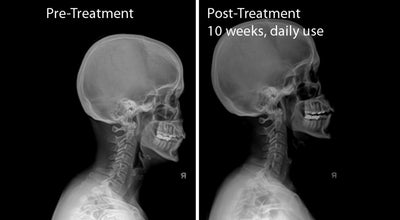



Radiographic Sagittal Alignment and Neurological Changes Following Conservative Cervical Structural Rehabilitation After Motor Vehicle Collision in a Patient With Pre-existing Scoliosis: A Case Report

Motor vehicle collisions (MVCs) are a frequent cause of cervical spine injury and may result in persistent neurological and structural sequelae in a subset of patients. Many individuals may improve with standard active management. Complex presentations involving sagittal malalignment and suspected segmental instability remain clinically challenging. The relationship between cervical alignment, dynamic motion behavior, and neurological status continues to be explored within contemporary spinal biomechanics literature.
This case report describes a 28-year-old woman who presented with persistent neck pain, neurological deficits, and functional limitation following a motor vehicle collision. The patient had a history of moderate thoracic scoliosis. Initial examination revealed forward head posture, reduced cervical extension, right-sided C8 sensory disturbance, and right C5-C8 motor weakness. Radiographic analysis demonstrated reduced cervical lordosis and abnormal segmental angular and translational motion on flexion and extension imaging. The Functional Rating Index (FRI) score at baseline was 23, indicating substantial disability.
The patient underwent a structured course of conservative spinal rehabilitation emphasizing sagittal alignment restoration, neuromuscular retraining, and segmental motion control over 17 visits. Follow-up evaluation at three months demonstrated normalization of dermatomal sensation and motor strength, improved cervical range of motion, and a reduction in functional disability with the Functional Rating Index decreasing to 3. Repeat radiographs showed increased cervical lordosis and decreased abnormal intersegmental translation.
This case documents concurrent neurological and radiographic changes in a post-collision presentation occurring in the context of pre-existing scoliosis. Although causation cannot be established from a single case, the findings highlight the potential relevance of evaluating cervical alignment and dynamic motion behavior in patients with neurologically involved whiplash presentations.
Read the full report